

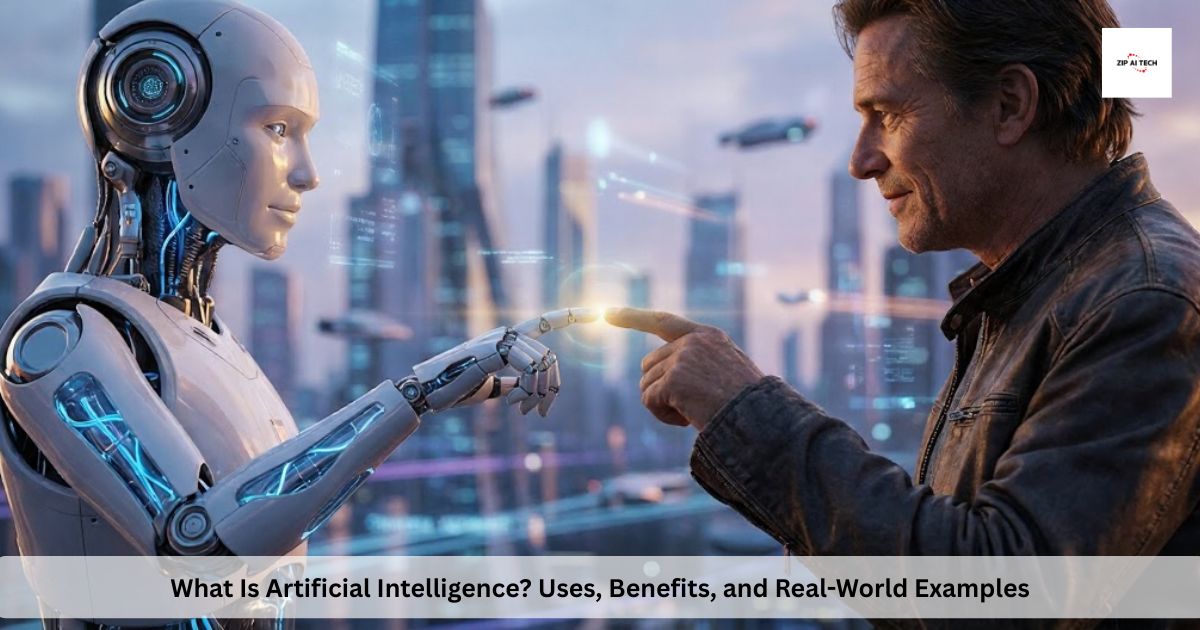
Artificial Intelligence Is Already Part of Daily Life
Artificial intelligence works quietly in everyday moments. Phones unlock through face recognition systems, emails are sorted automatically, videos are suggested based on viewing habits and navigation apps adjust routes in real time. These experiences feel normal even though intelligent systems power them.
This technology no longer exists only inside laboratories or research facilities. It supports daily life across homes, workplaces, hospitals, schools and digital platforms. Shopping, communication, entertainment and security systems all depend on intelligent processes running behind the scenes.
Understanding how AI functions helps people make sense of modern digital tools and prepares them for future changes. This guide explains the concept clearly by showing how it works where it is used and why it continues to expand.
What Is Artificial Intelligence
Artificial intelligence refers to computer systems designed to perform tasks normally associated with human reasoning. These tasks include learning from data, identifying patterns, understanding language and making informed choices.
Unlike traditional software that follows fixed instructions, intelligent systems adapt. They improve performance by learning from new information instead of relying only on predefined rules.
In simple terms, AI enables machines to respond intelligently rather than behaving in a rigid predictable way.
How Artificial Intelligence Differs From Traditional Software
Traditional programs operate the same way every time they are used. When conditions change the software must be manually updated to continue functioning correctly.
Intelligent systems behave differently. They analyze information, recognize trends and adjust outcomes when new data appears. This flexibility allows them to manage complex tasks such as speech recognition, visual analysis and forecasting, where fixed logic often fails.
How Artificial Intelligence Works
AI operates through connected processes that function together.
Data as the Foundation
Every intelligent system depends on data. This may include text, images, audio, numerical values or sensor signals. The quality of outcomes depends heavily on the quality of the data used.
Before learning begins, information is cleaned, organized and structured so systems can process it correctly.
Learning From Experience
Many intelligent systems rely on machine learning techniques. Instead of receiving detailed instructions they learn by examining examples. Each example helps refine future responses.
For example, image recognition tools study thousands of labeled images and gradually improve their ability to identify objects accurately.
Applying Learned Knowledge
Once trained systems apply what they have learned to real situations. Feedback helps improve results over time as new data becomes available.
Types of Artificial Intelligence
AI can be categorized based on capability.
Narrow Artificial Intelligence
Narrow AI is built to perform a specific task and cannot operate beyond that scope.
Examples include voice assistants, recommendation engines, facial recognition tools and language translation software. Most current systems belong to this category.
General Artificial Intelligence
General AI describes machines intended to manage many kinds of thinking tasks rather than a single function. This level of intelligence is still under development and does not yet exist in real-world systems.
Super Artificial Intelligence
Super AI refers to theoretical systems that would exceed human intelligence in every field. This idea raises questions about safety control and responsibility.
Artificial Intelligence in Everyday Life
Intelligent systems influence daily routines in subtle ways.
Smartphones enhance photos automatically. Search engines rank results based on relevance. Email platforms filter unwanted messages. Streaming services suggest content based on past behavior.
Over time these systems learn preferences and create smoother, faster digital experiences.
Artificial Intelligence in Business Operations
Businesses use intelligent systems to improve efficiency and decision quality.
Common applications include automated customer support, sales forecasting, inventory management, workflow optimization and risk evaluation. These tools reduce repetitive work and help teams focus on planning and growth.
Artificial Intelligence in Healthcare
Healthcare organizations use intelligent systems to support medical professionals.
Applications include imaging analysis, early disease identification, patient monitoring, treatment planning and research support. These tools assist doctors by speeding up analysis while keeping human judgment central.
Artificial Intelligence in Financial Services
Financial institutions rely on intelligent systems to manage risk and monitor activity.
Fraud detection, credit evaluation, transaction monitoring and market analysis depend on continuous data processing. These systems detect patterns that manual methods may overlook.
Artificial Intelligence in Education
Educational platforms use intelligent systems to adapt learning experiences.
Examples include personalized study paths, automated assessments, performance tracking and digital tutoring. Students receive guidance aligned with individual progress rather than fixed timelines.
Real World Applications of Artificial Intelligence
Smartphones
Modern phones use intelligent systems for facial recognition, camera adjustment, voice interaction, battery management and security features. These improvements enhance usability without user effort.
Transportation
Traffic prediction, route planning, driver assistance and safety monitoring rely on intelligent systems. These tools help reduce congestion and improve travel reliability.
Online Shopping
E-commerce platforms use intelligent systems to suggest products, analyze behavior, adjust pricing and detect misleading reviews. Shoppers find relevant items faster and with greater accuracy.
Media and Content Creation
Content platforms apply intelligent tools for moderation, image creation, video enhancement and music support. These tools assist creators while leaving creative decisions to humans.
AI-Powered Products Used by Consumers
Intelligent systems support many everyday products.
Smart speakers manage connected devices. Fitness trackers analyze activity and sleep patterns. Photo editing apps improve images automatically. Writing tools assist with drafting and research. Navigation apps predict delays and suggest alternate routes.
These examples show how intelligent systems improve convenience without adding complexity.
Benefits of Artificial Intelligence
Greater Efficiency
Repetitive tasks are completed faster, which saves time across industries.
Improved Accuracy
Data-based analysis reduces mistakes, especially in large-scale operations.
Lower Operating Costs
Automation allows growth without proportional increases in staffing.
Personalized Services
Systems adapt responses based on individual behavior which improves satisfaction.
Challenges and Limitations
Data Quality Dependence
System performance reflects the quality of training data. Data that is partial or skewed often leads to flawed system outputs.
Workforce Changes
Automation reshapes job roles and increases the demand for new skills.
Privacy and Security Concerns
Sensitive information must be protected through strong data handling practices.
Ethical Considerations
Fair transparent and accountable system design remains essential.
Artificial Intelligence and Machine Learning
Artificial intelligence represents the broader goal of creating intelligent systems. Machine learning refers to the techniques that allow systems to learn from data.
Every machine learning system belongs to AI while not all intelligent systems rely solely on machine learning.
Trust and Safety
Safety depends on design choices data handling and human oversight.
Responsible development focuses on reducing bias protecting information ensuring transparency and keeping humans involved in important decisions. Trust grows when systems behave consistently and responsibly.
The Future of Artificial Intelligence
Intelligent systems continue expanding across healthcare, education, manufacturing, transportation and urban planning.
Rather than replacing people, these systems support human abilities and allow greater focus on creativity, leadership and problem solving.
Understanding this technology today helps individuals prepare for long-term digital change.
Artificial Intelligence for Beginners Summary
- Artificial intelligence helps machines understand information and act based on patterns they learn
- Intelligent systems already exist in everyday tools
- Key benefits include speed, accuracy and personalization
- Responsible use remains important
Final Thoughts
Artificial intelligence continues shaping how people live, work and interact with technology. Its influence remains subtle yet widespread. Learning how these systems operate helps users make informed choices and adapt with confidence.
For ongoing updates and detailed analysis of intelligent tools trends and applications platforms such as zipaitech.com, provide practical and reliable insights. Also follow us: Facebook | Instagram | Pinterest
Common Questions About Artificial Intelligence
Q.1 What is artificial intelligence in simple words
It refers to machines performing tasks that usually require human thinking.
Q.2 Where is artificial intelligence used daily
Phone navigation apps, shopping platforms and digital assistants.
Q.3 Can artificial intelligence be harmful
Risks appear when systems lack ethical design or oversight.
Q.4 Will artificial intelligence remove jobs
Some roles change while new opportunities continue to emerge.


One thought on “What Is Artificial Intelligence? Uses, Benefits, and Real-World Examples”